ASCEND undertakes and enables use-inspired, impactful research and advanced development in high-performance computing and communication, cloud computing and quantum information science—in collaboration with professors, staff and students across Tennessee Tech.
ASCEND leads Tennessee Tech forward with enabling technology by the acquisition, management, deployment and responsible stewardship of advanced, often experimental, computational, data and quantum resources delivered to Tennessee Tech people and their collaborators with user-centric processes, usable security and high quality.
The center supports experiential learning for students and outreach to its community and to appropriate and timely transition of its key innovative outcomes to industry, academia and government through partnership, sharing, standardization and entrepreneurship and commercialization.
Articles
ASCEND at SC24
Information about ASCEND's time at SC24.
Research Contributions
Summer of Skills
Tech students sharpen HPC skills through national lab internships
ASCEND at SC24
Tech students and faculty shine at SC24 conference
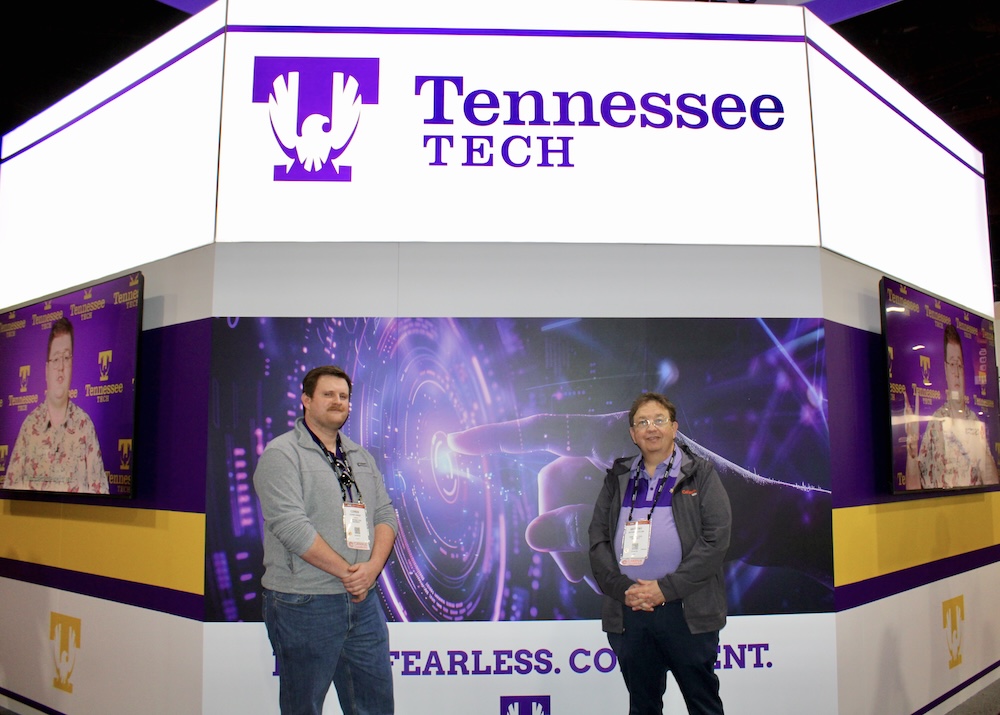
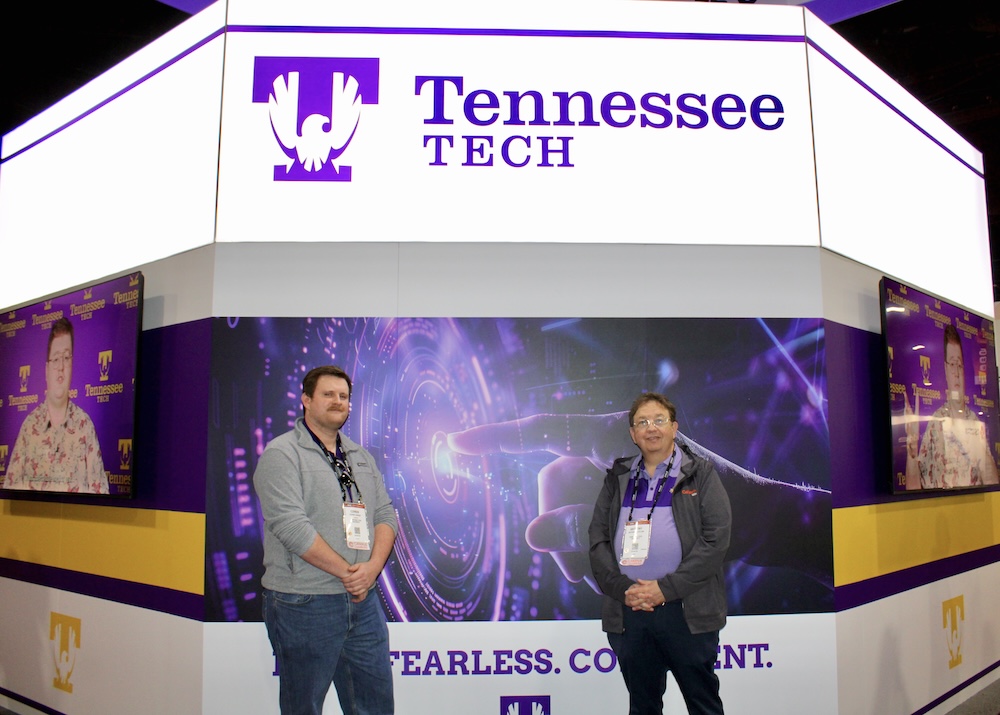
Tennessee Tech’s Corbin Cawood, senior scalable systems and networks architect, left, and Tony Skjellum, Ph.D., professor of computer science, stand by Tech’s booth at SC24.
Ascending with HPC: Tech students and faculty shine at SC24 conference
The stars are aligning for HPC in Tennessee - especially at Tennessee Tech, where students and faculty with a passion for high-performance computing are poised to shine.
“We couldn’t be better positioned to grow and prosper than we are right now,” said Tony Skjellum, professor of computer science, noting not only Tech’s successful debut as an exhibitor at the SC24 international supercomputing conference, but also its prime location amid the state’s tech sector.
Tennessee is the center of the world for supercomputing, from Oak Ridge National Laboratory, home of the world’s fastest supercomputer, to Memphis, where Elon Musk and xAI are set to build the world’s fastest AI supercomputer,” he said. “In between, Tennessee Tech is advancing HPC research, driving workforce development and building large-scale HPC and quantum resources at our forthcoming data center.
Plus, our newly approved ASCEND (Advanced Scalable Computing, Extreme Networks and Data) center is in the works.”
To spotlight its ascent in the HPC space, Tech was among nearly 500 exhibitors at SC24, which drew a record-breaking 18,100 attendees to Atlanta in November 2024 to explore the latest innovations in high-performance computing, networking, storage and analysis. More than 20 students, faculty and staff represented Tech at the event, with some showcasing the university’s achievements at its new 20x20-foot booth and others taking part in technical workshops, networking with industry professionals and presenting their research. The conference also provided an opportunity to connect with alumni, as well as strengthen Tech’s efforts to recruit, engage and retain students and faculty.
“We achieved more than 100 percent of our goals at SC24,” Skjellum said. “We built a lot of goodwill around the quality of our students, department and university, especially among local employers who didn’t realize they could tap into our talent. They know about us now.”
And that presents new opportunities for everyone.
“We have follow-up meetings with organizations like Oak Ridge National Laboratory,” Skjellum said. “Plus, we’ve established collaborations with key technical partners, providing our students with valuable opportunities to engage directly in the profession.”
These new connections are solidifying Tech’s position as a key player in computing - and, as if by cosmic design, the playing field is becoming increasingly bright in Tennessee.
“With companies like Microsoft and AWS (Amazon Web Services) already established here and Oracle moving its world headquarters to Nashville, the demand for a skilled AI workforce is skyrocketing - and HPC makes AI go,” Skjellum said.
Tennessee Tech aims to build on its SC24 debut by increasing its technical presence at supercomputing conferences.
“Our investment has been in engaging with others to raise awareness about Tennessee Tech so that we’re attracting prospective students and faculty and ensuring employers recognize the value of our graduates,” Skjellum said. “At the same time, we’re putting our current students front and center in their discipline.”
So they can shine like stars.
Research Contributions
Research Contributions
ASCEND staff and students have contributed to multiple facets of high-performance computing (HPC) research including communication profiling, supercomputer availability for underserved areas, heterogeneous computing, and MPI optimization. More information on each of these areas is given in their corresponding sections.
MPI Optimizations
The Message Passing Interface (MPI) is the backbone of HPC, and has been for over 30 years. However, supercomputers have come a long way since the MPI standard, making it somewhat flawed for modern systems and applications, thus the need for modern optimizations and paradigm shifts. By far the largest part of our MPI optimization efforts are focused on optimizing interactions between MPI and GPUs, as the MPI standard up to this point has done little to acknowledge the prevalence of GPUs in today’s architectures.
Concepts for designing modern C++ interfaces for MPI. C Nicole Avans, Alfredo A Correa, Sayan Ghosh, Matthias Schimek, Joseph Schuchart, Anthony Skjellum, Evan D Suggs, Tim Niklas Uhl. European MPI Users’ Group Meeting, 2025.
Cycle-Stealing in Load-imbalanced HPC Applications. Po Hao Chen, Akshaya Bali, Shining Yang, Pouya Haghi, Carlton Knox, Benjamin Li, Amr Akmal Abouelmagd, Anthony Skjellum, Martin Herbordt. IEEE High Performance Extreme Computing (HPEC) Conference, 2024.
HPC Education & Availability
This paper addresses the lack of HPC computing and education resources in Tennessee and introduces the Tennessee Research Computing and Data (TNRCD) Consortium, a voluntary organization with members across the state for the purpose of making education and compute resources more available to members of the public.
Communication is the limiting factor of most HPC applications, so naturally it is more important to optimize communication over computation. In these articles, we introduce two new tools and demonstrate the insights gained from them on relevant applications.
Scalable, High-Fidelity Monitoring of Application Communication Patterns in Vernier. Jered Dominguez-Trujillo, Derek Schafer, Riley Shipley, Ryan Marshall, Nicholas Bacon, Maxim Moraru, Galen Shipman, Anthony Skjellum, Patrick Bridges. Proceedings of the SC’25 Workshops of the International Conference for High Performance Computing, Networking, Storage and Analysis, 2025.
Heterogeneous Computing
Because of the large increase in computation power they provide, GPUs are nearly ubiquitous in HPC, but external software hasn’t quite caught up, as is the case in MPI. Our works provide new understanding and functionality for applications using GPUs.
GPU Partitioning, Power, and Performance of the AMD MI300A. Amr Abouelmagd, David Boehme, Stephanie Brink, Jason Burmark, Michael McKinsey, Anthony Skjellum, Olga Pearce. Proceedings of the Supercomputing Asia and International Conference on High Performance Computing in Asia Pacific Region, 2026.
Understanding gpu triggering apis for mpi+ x communication. Patrick Bridges, Anthony Skjellum, Evan Suggs, Derek Schafer, and Purushotham Bangalore. European Parallel Virtual Machine/Message Passing Interface Users’ Group Meeting, 2024.
Summer of Skills
Tech students sharpen HPC skills through national lab internships
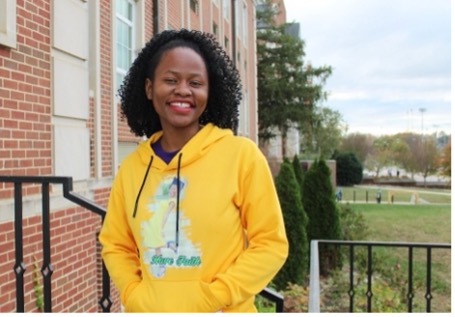
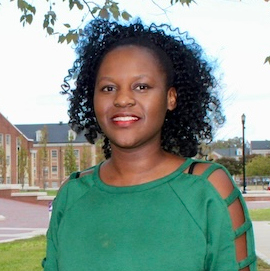
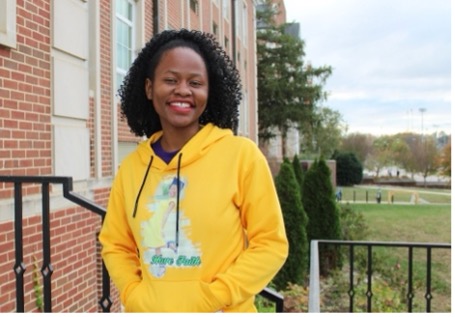
Dr. Grace Nansamba, PhD
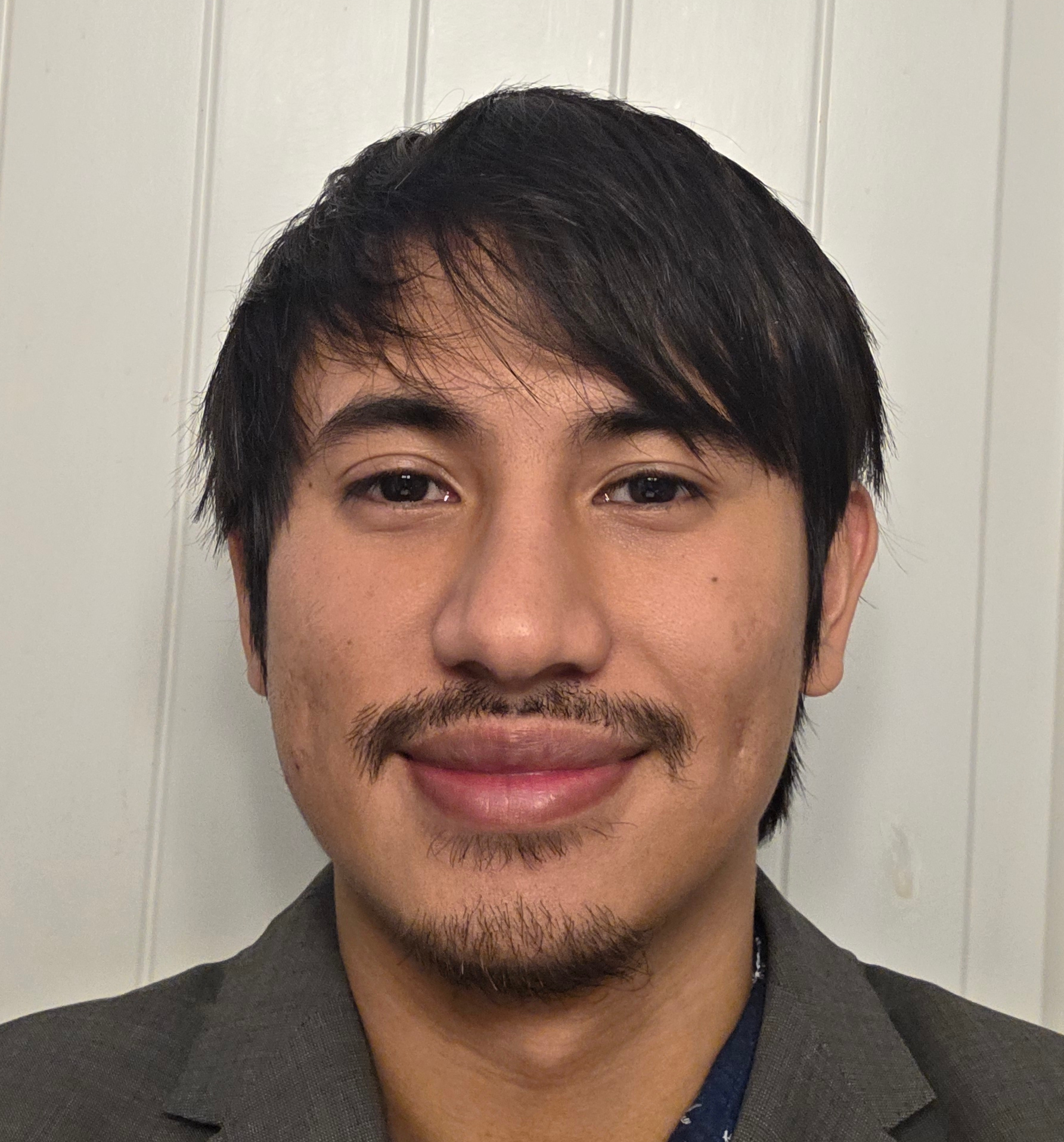
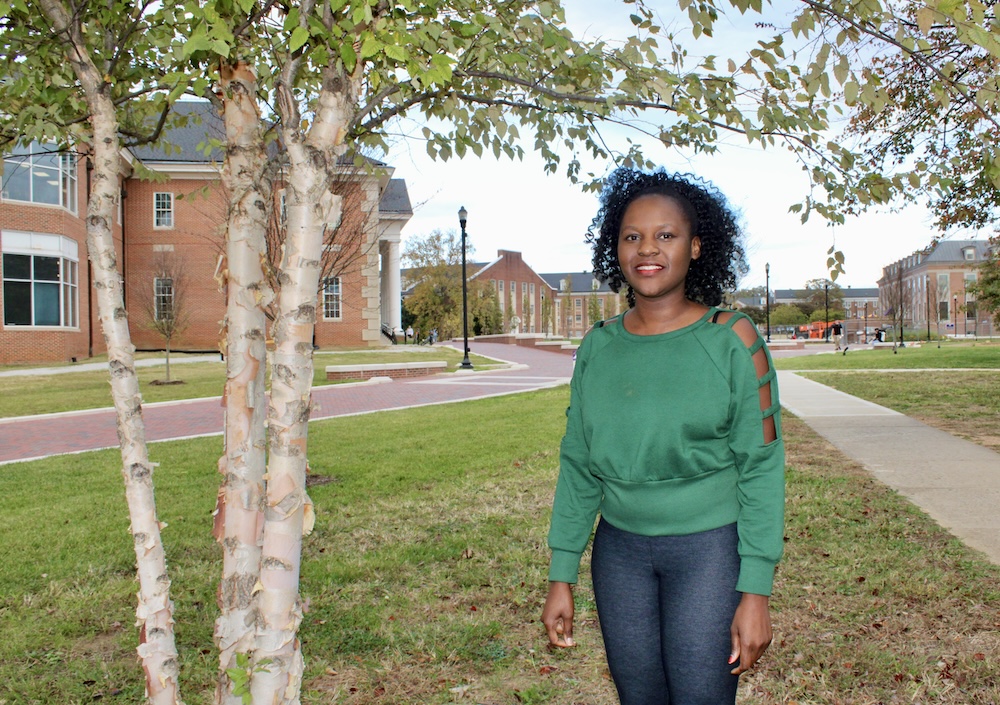
Evelyn Namugwanya
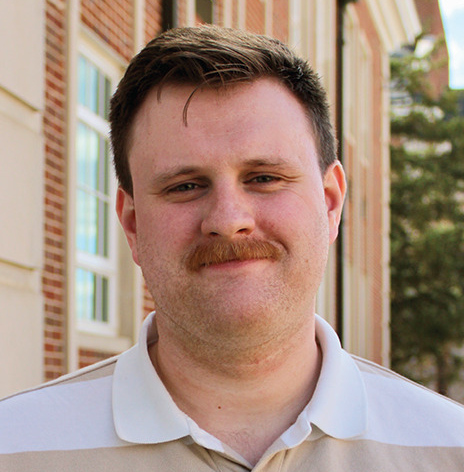
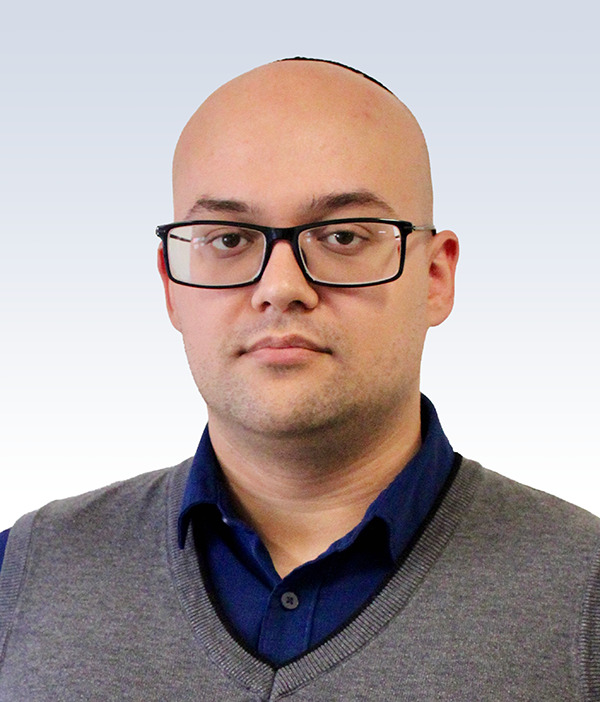
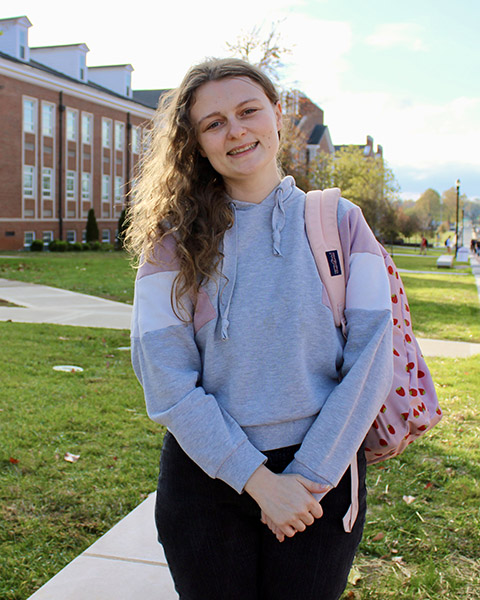
Nicole Avans
Summer of Skills: Tennessee Tech PhD students sharpen HPC skills through internships at national laboratories
A passion for high-performance computing took three Tennessee Tech doctoral students to national laboratories for a summer of experiential learning.
Nicole Avans completed an internship at Sandia National Laboratories in Albuquerque, N.M., while Evelyn Namugwanya and Grace Nansamba elevated their HPC skill sets at Lawrence Livermore National Laboratory in Livermore, Calif.
What was the best part of your HPC internship?
“It was incredible to experience the culture of New Mexico while developing my confidence as a computer scientist and research software engineer,” Avans said of her time at Sandia National Laboratories. “I met a diverse group of interns and mentors from a variety of places and learned many things in and out of the professional sphere.”
As a computer science intern - a position Avans is continuing remotely - she has been involved in research and assisting in the development of the KokkosComm library, a communication framework that optimizes data exchange and parallel processing in distributed computing environments.
“I established a series of performance benchmarks to help illuminate existing issues in this new library and areas for further optimization,” she said.
At Lawrence Livermore National Laboratory, Namugwanya and Nansamba were pleased to have made valuable connections with HPC professionals and peers.
“The entire lab experience was incredible,” Namugwanya said. “Working in person with collaborators, having hands-on access to advanced resources and meeting students from all over the world made the internship truly memorable.”
Namugwanya’s internship provided an opportunity for her to work on the back-end development of a Caliper profiling tool, a performance analysis tool used in HPC environments.
“My team and I introduced a new concept of communication region annotations within Caliper, which are essential for profiling HPC benchmarks in the BenchPark suite,” she said. “This enhancement allows for advanced performance analysis and helps identify specific areas for optimization in HPC applications.”
She said the work was an eye-opener: “Contributing to such a sophisticated HPC tool changed my perspective on the details involved in HPC software and the importance of each component’s efficiency.”
Nansamba, who also interned at Lawrence Livermore National Laboratory, enjoyed the structured work schedule and said lab employees were supportive to students.
“I worked on performance analysis of the BenchPark suite for testing HPC systems,” she said, referring to an open collaborative repository for reproducible specifications of HPC benchmarks. “It enables cross-site collaboration on benchmarking by providing a mechanism for sharing reproducible, working specifications.”
Additional highlights for Nansamba included winning a best poster presentation award and making new friends.
What are some important things you learned?
Avans said she gained a better understanding of what it means to relocate for work while she was at Sandia National Laboratories: “It was an immersive learning experience. I had never moved such a long distance, and it was valuable to see what benefits and drawbacks come with relocating for a career opportunity.”
She also valued the numerous educational lectures and presentations.
“The focus was more on continuing education than on production-level software engineering,” she said. “However, on the software engineering side, it was beneficial to become aware of some of my blind spots. I learned many new things about collaborative coding, such as intermediate and advanced use cases of Git and GitHub that are critical in most development careers.”
Namugwanya said her biggest takeaway from Lawrence Livermore National Laboratory was understanding the critical role of detailed profiling and performance analysis in HPC.
“I gained valuable skills in performance tuning, developed a deeper knowledge of data collection in parallel computing environments, and gained hands-on experience with advanced profiling techniques. These skills will be valuable for future projects, especially those focused on optimizing complex HPC applications such as collective communication patterns,” she said.
Nansamba learned about the importance of team collaboration to achieve a common goal.
“We had weekly stand-up meetings to give updates about the work, and this was a motivation to finish tasks,” she added. “My team at the lab was pretty fun to work with.”
Avans’ summer internship led to an opportunity to tour Fugaku, a supercomputer focused on energy efficiency at the RIKEN Center for Computational Science in Kobe, Japan. She also presented her work at the 2024 IEEE International Conference on Cluster Computing.
What advice do you have for students seeking internships?
Evelyn Namugwanya: “Enjoy the internship experience and stay open to learning. There’s something amazing about putting your academic knowledge into practice, and it’s incredibly fulfilling.”
Grace Nansamba: “It’s possible to get an internship. Inquire from professors whether they can recommend you. It paints a good picture of life after school. It’s exciting!”
Nicole Avans: “Creating and maintaining connections with people in the field through collaborative work and conference attendance will open many doors. If you aren’t involved in any projects, I recommend speaking with your advisor about your desire to get involved. There is almost always more work
to be done than people to do it.”